.apr
Abutment & pier design
A dedicated tool for bridge abutment and pier design.
The Automatic Design Software for Substructures (Abutments, Piers, Seismic Analysis, Strut-Tie Model)
Key features
- Abutments and piers in one run
- Load and seismic checks
Product introduction
Overview
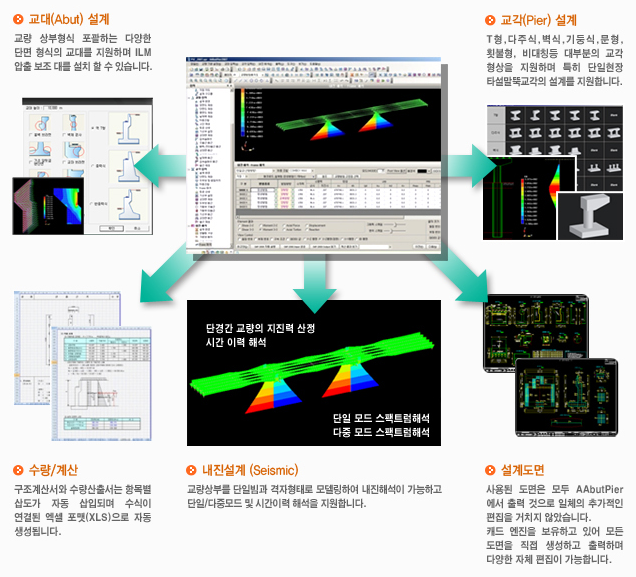
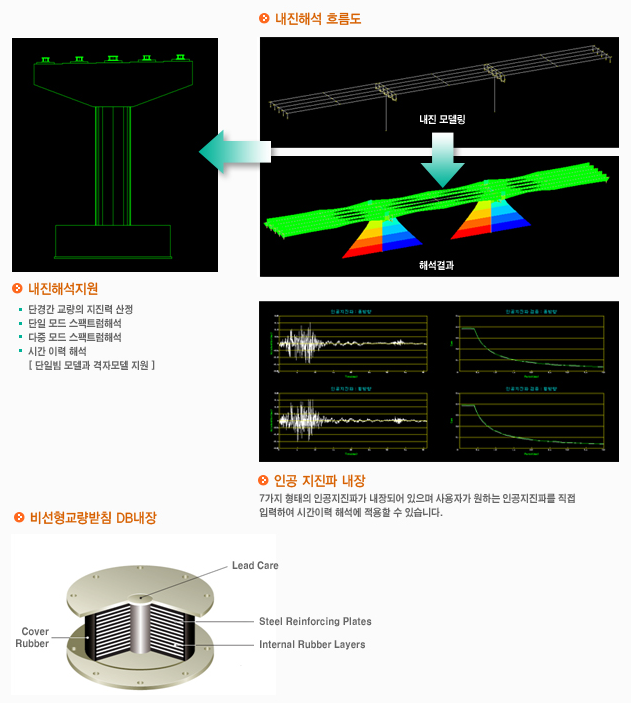
AAbutPier is design-automation software for bridge substructures. It models the whole bridge, runs seismic and seismic-isolation analysis, and produces the final design deliverables for abutments and piers.
Some 300 firms in Korea use about 400 licenses. Its deliverables have been proven on many projects over the years, and continuous upgrades have raised its quality.
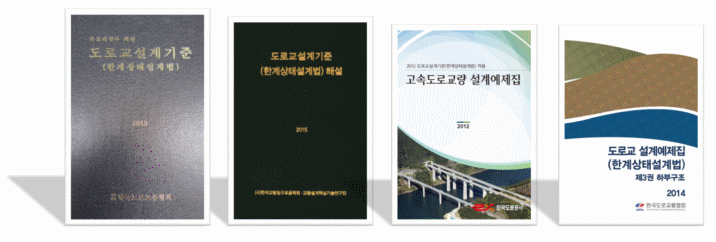
AAbutPier 2014 (released 14 November 2013) supports the Korean Concrete Structure Design Code 2012, the Korean Highway Bridge Design Code 2010 (ductility-based seismic design) and strut-tie model design.
The AAbutPier Limit State module (LSD, released 26 May 2015) supports design to the Korean Highway Bridge Design Code (Limit State Design, 2012 and 2015).
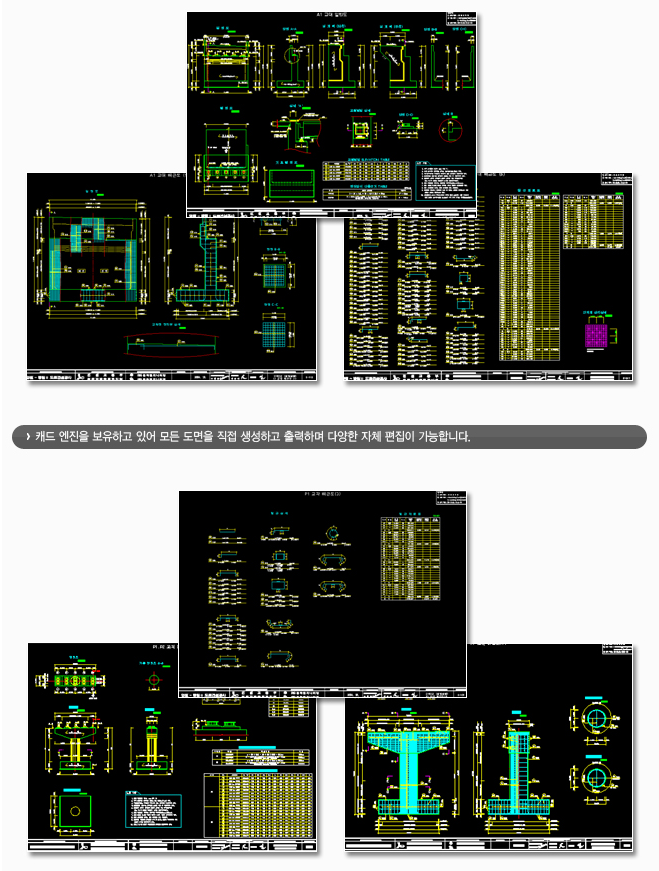
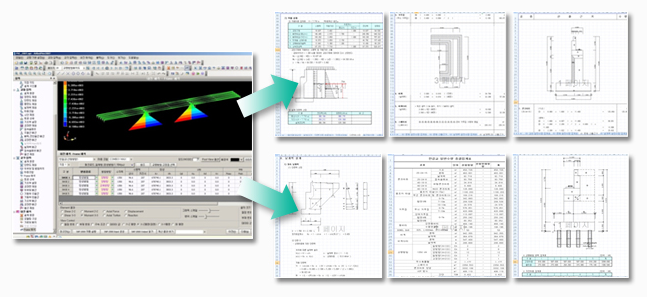
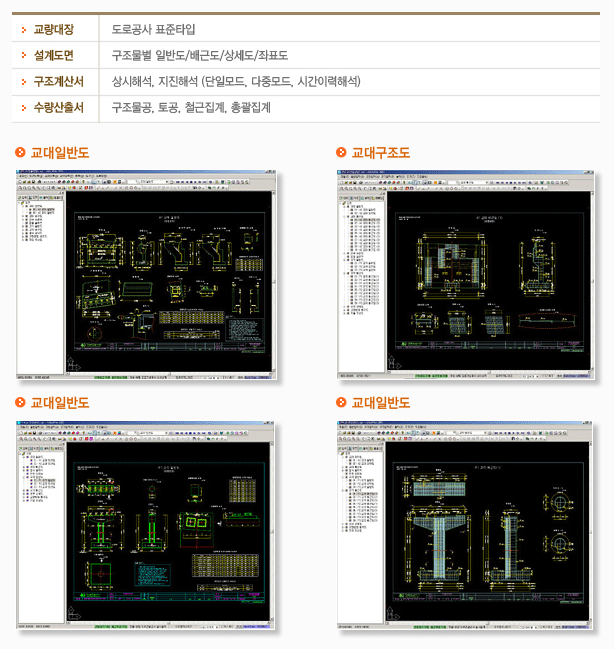
-SI and CGS unit systems, switched at any time with a single toggle.-Auto Modeling creates 2D/3D analysis models with no extra input.-Bridges are laid out along the alignment, with many shapes supported.-Optimized and iterative design closes in on the safety factor you want.-One-click design check — design without printing the calculation report or summary.-Drawings in DWG/DXF and calculation reports / quantity take-offs in Excel are generated automatically.
Supported functions
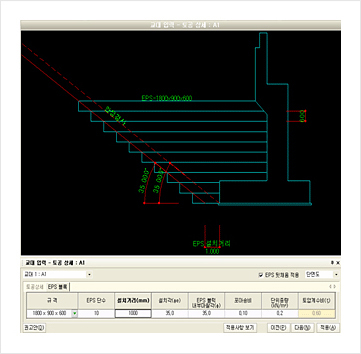
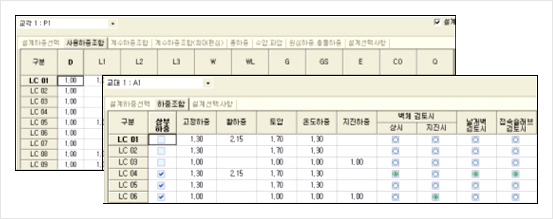
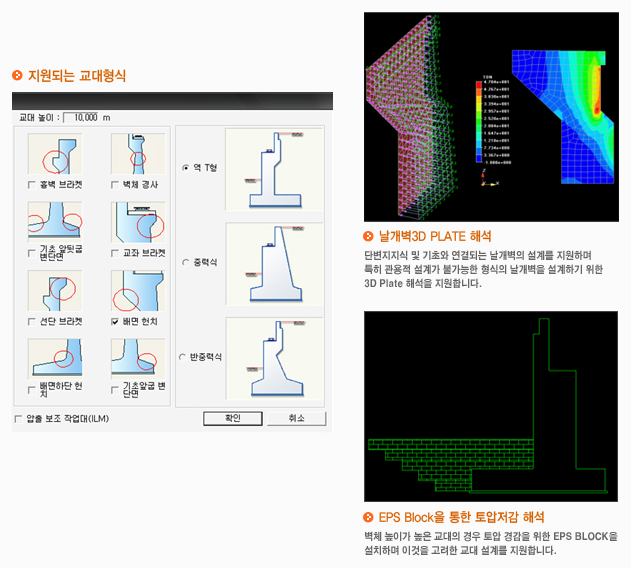
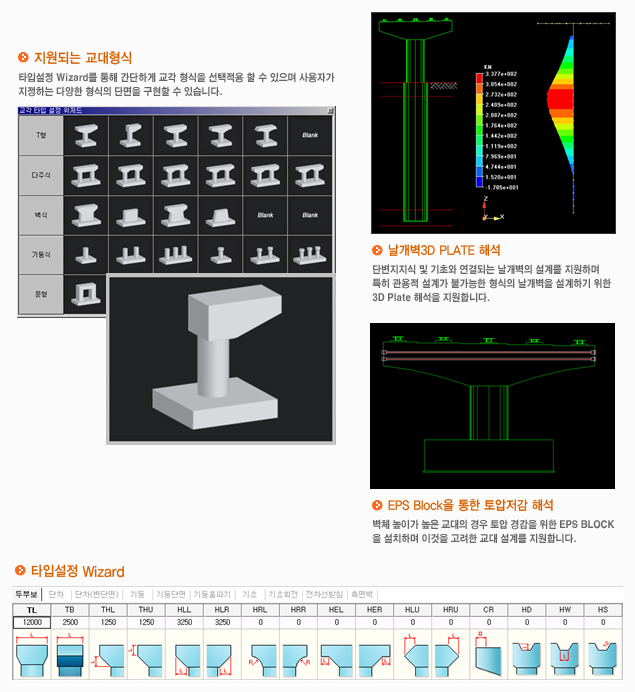
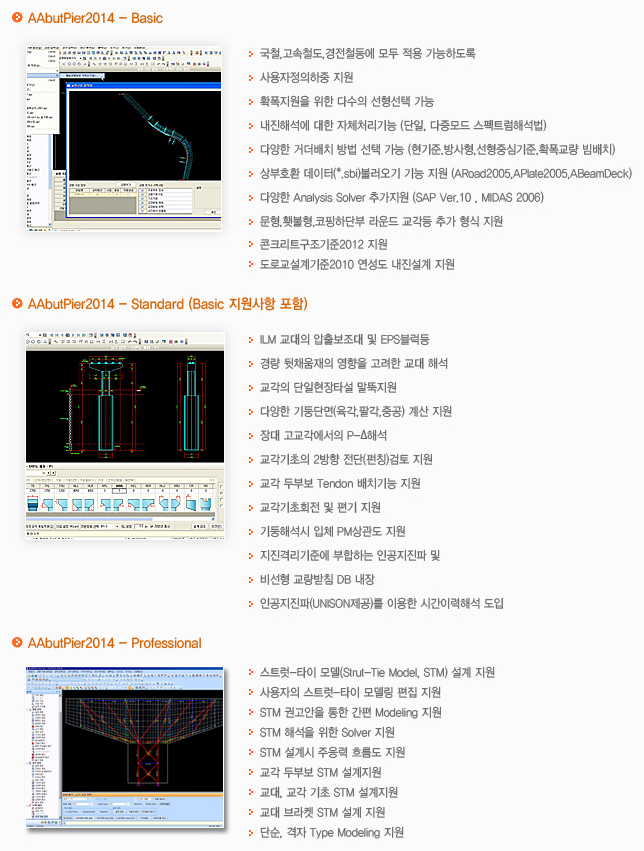
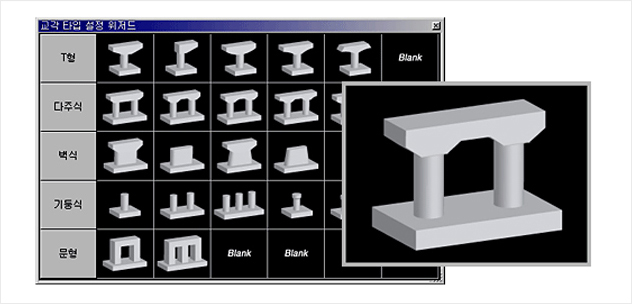
-Road, railway, light-rail and high-speed-rail bridges.-Multiple alignments for widened bridges.-Single- and multi-mode spectrum and time-history analysis for seismic evaluation.-Girder-layout optimization for beam bridges.-Links to general structural solvers (SAP Ver.10, MIDAS 2006).-T-, π-, single-column, multi-column, wall, portal and torch-shaped piers, and rounded coping soffits.-ILM abutment launching supports and EPS lightweight backfill.-Single cast-in-place pile piers.-P-delta analysis for tall piers and two-way shear check of pier footings.-Tendon layout in pier caps.-Footing rotation and eccentricity.-Built-in artificial earthquake records and nonlinear bearing database.-3D plate analysis of wing walls.-Spread, mass and pile (steel pipe, PHC, cast-in-place) foundations.-Circular, rectangular, hexagonal, hollow and elliptical columns.-Every load acting on a real bridge is calculated automatically, with user-defined loads supported.-Korean Concrete Structure Design Code 2012.-Ductility-based seismic design and pier checks to the Korean Highway Bridge Design Code 2010.-Strut-tie model design as adopted in the Concrete Structure Design Code (2007, 2012), the Railway Bridge Design Code 2011 and the Highway Bridge Design Code 2012 (limit state).-User editing of strut-tie models, a solver for strut-tie analysis and principal stress flow for building the model.-Strut-tie design of pier caps, abutment and pier footings and abutment brackets.-Simple and grid modeling.-Korean Highway Bridge Design Code (Limit State Design, 2012 and 2015).-Checks for each limit state, with the max/min γp load factors and load-direction sub-combinations so the critical case is easy to find.-Concrete strength and cover by exposure environment, loads classified per LSD, load modifiers for redundancy, ductility and importance, and material and foundation resistance factors per limit state.-Lap lengths from confinement stress, splice ratio and reinforcement ratio per LSD, horizontal reinforcement check at 1,200 mm thickness, and Θ and Vcd from the shear reinforcement provided.-Indirect crack control and crack-width checks for serviceability, and stability checks on soil and rock.-Seismic analysis: models with pier flexural stiffness or overall stiffness, second-order moments from P-Δ, shear and footing checks from plastic-hinge forces, and required ductility per load case with the resulting column shear check.
Pier coping input
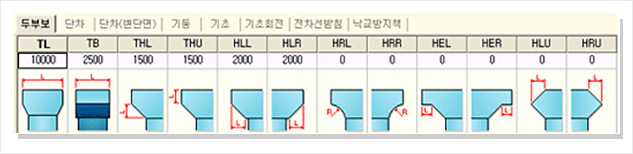
Pier type wizard
Key functions
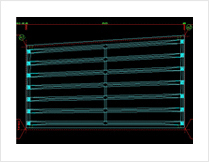
Automatic girder layout for widened bridges
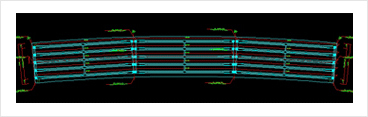
Optimized layout for curved girder bridges
Lightweight backfill (EPS blocks)